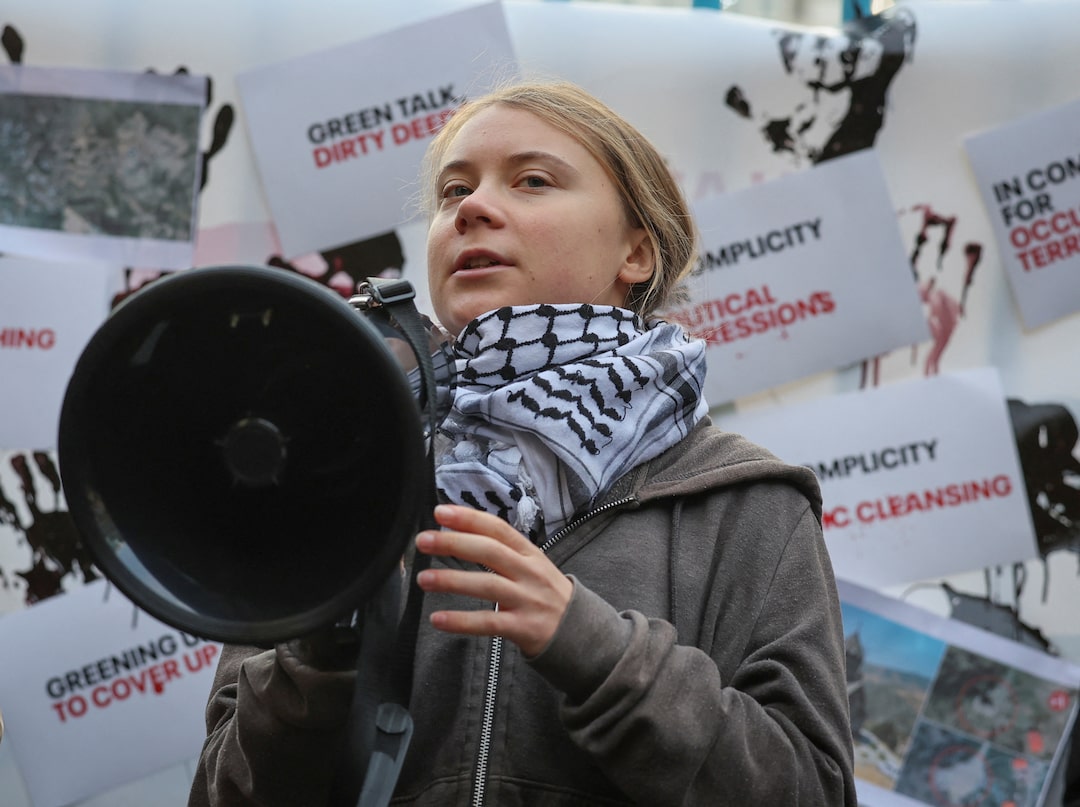
Greta Thunberg is a Swedish environmental activist who has become a global symbol for youth-led climate action. Her straightforward, impassioned speeches and school strikes have mobilized millions worldwide, drawing unprecedented attention to the urgency of the climate crisis and holding political and corporate leaders accountable for their inaction.
Quick Facts
| Full Name | Greta Thunberg |
|---|---|
| Known As | Greta Thunberg |
| Birth Date | January 3, 2003 |
| Age | 21 |
| Birthplace | Stockholm, Sweden |
| Nationality | Swedish |
| Profession | Environmental activist |
| Parents | Malena Ernman (mother), Svante Thunberg (father) |
From a solitary protest outside the Swedish parliament to addressing the United Nations and leading international movements, Thunberg's journey has redefined environmental advocacy. Her influence extends beyond activism into public discourse, policy debates, and cultural conversations, making her one of the most recognizable and impactful figures of the 21st century on environmental issues.
Greta Thunberg Early Life and Childhood
Greta Thunberg was born on January 3, 2003, in Stockholm, Sweden. She grew up in a middle-class family in the Swedish capital, where she developed an early awareness of environmental issues. As a child, Thunberg was described as quiet and introspective, with a strong sense of justice. Her interest in climate change began around the age of eight when she first learned about the greenhouse effect and global warming in school. This knowledge deeply affected her, leading to periods of depression and selective mutism, during which she would only speak to her immediate family. Thunberg has publicly attributed her activism partly to these personal struggles, stating that her diagnosis of Asperger syndrome, a form of autism, has given her a unique perspective, allowing her to see the climate crisis in stark, uncompromising terms. Her childhood was marked by a growing conviction that the world was facing an existential threat, which she felt was being ignored by adults in positions of power.
Greta Thunberg Family Life and Personal Background
Greta Thunberg comes from a family with artistic and intellectual backgrounds. Her mother, Malena Ernman, is a well-known Swedish opera singer who represented Sweden in the Eurovision Song Contest in 2009. Her father, Svante Thunberg, is an actor and author, and her paternal grandfather is actor and director Olof Thunberg. Thunberg has a younger sister, Beata Ernman, who is also involved in activism and has spoken publicly about her own mental health challenges. The family has been supportive of Thunberg's activism, with her parents initially expressing concern but later embracing her mission. In interviews, they have described how Thunberg's dedication to climate issues influenced their own lifestyles, leading them to adopt more sustainable practices, such as giving up air travel and reducing meat consumption. Thunberg's family background provided a platform that helped amplify her message early on, though she has consistently emphasized that her activism is driven by personal conviction rather than familial influence.
Greta Thunberg Education
Greta Thunberg attended school in Stockholm, where her education was interrupted by her climate activism. In August 2018, at the age of 15, she began skipping school on Fridays to protest outside the Swedish parliament, demanding stronger action on climate change. This evolved into the global Fridays for Future movement, which led to her taking a sabbatical from formal education during the 2019-2020 school year to focus on activism, including traveling to climate conferences and events worldwide. Thunberg has spoken about the irony of studying for a future that is threatened by climate inaction, and she has criticized educational systems for not adequately addressing environmental issues. In 2021, she returned to school, balancing her studies with continued activism. Thunberg's educational journey has been unconventional, shaped by her belief that immediate action on climate change is more critical than traditional academic pursuits, though she has expressed a desire to complete her education.
Greta Thunberg Career Beginnings
Greta Thunberg's career as an activist began in August 2018 with a solitary school strike outside the Swedish parliament in Stockholm. Inspired by student activists in the United States who protested gun violence, she decided to take similar action for climate change, carrying a hand-painted sign that read "Skolstrejk för klimatet" (School Strike for Climate). She initially planned to strike every day until the Swedish general election in September 2018, but continued beyond that, attracting media attention and inspiring other students to join. Her early activism was characterized by a simple, direct approach: she sat alone, handed out flyers explaining the science of climate change, and used social media to share her message. This grassroots effort quickly gained traction, with local and then international news outlets covering her protest, marking the start of her transformation from a unknown teenager to a global figure.
Greta Thunberg Rise to Fame
Greta Thunberg's rise to fame accelerated in late 2018 and early 2019 as her school strikes went viral on social media and inspired similar protests worldwide. In December 2018, she addressed the United Nations Climate Change Conference (COP24) in Katowice, Poland, delivering a powerful speech that criticized world leaders for their lack of action, which was widely shared online. This was followed by her participation in the World Economic Forum in Davos in January 2019, where she famously told attendees, "I want you to panic." Her blunt, emotionally charged rhetoric resonated with a global audience, particularly young people, leading to the formation of the Fridays for Future movement, with millions of students joining climate strikes in over 150 countries. Thunberg's fame peaked in September 2019 when she sailed across the Atlantic Ocean on a zero-emissions yacht to attend the UN Climate Action Summit in New York, avoiding air travel due to its carbon footprint. At the summit, she delivered her iconic "How dare you" speech, condemning global inaction, which became a defining moment in her career and solidified her status as a leading voice in the climate movement.
Greta Thunberg Professional Career
Greta Thunberg's professional career as a climate activist has been marked by strategic advocacy, international mobilization, and sustained pressure on institutions. Since her initial protest, she has leveraged her platform to drive change through speeches, protests, and engagements with global leaders.
Early Career
In the early stages of her career, Thunberg focused on building momentum for the Fridays for Future movement. She organized weekly strikes in Stockholm and used social media to connect with activists globally, encouraging them to start their own protests. During this period, she gave interviews to major media outlets, such as The Guardian and BBC, explaining the scientific basis for her activism and calling for systemic change. Her early career was characterized by a grassroots approach, with an emphasis on youth empowerment and direct action, rather than formal policy work.
Major Career Milestones
Key milestones in Thunberg's career include her speech at the UN Climate Change Conference in 2018, which brought her international recognition; her address at the World Economic Forum in 2019, where she challenged economic leaders; and her transatlantic sail to New York in 2019, which highlighted sustainable travel. In 2019, she also met with Pope Francis and other world leaders, advocating for stronger climate commitments. Another significant milestone was her nomination for the Nobel Peace Prize in 2019 and 2020, which amplified her message globally. Thunberg's career has involved testifying before legislative bodies, such as the US Congress and the European Parliament, where she has presented climate science and urged political action.
Notable Performances or Projects
Notable projects include the Fridays for Future movement, which she co-founded, organizing global climate strikes that have involved millions of participants. Thunberg has also been involved in campaigns like "School Strike for Climate," which has spread to hundreds of cities worldwide. In 2020, she launched the "Greta Thunberg Foundation," a non-profit organization focused on promoting ecological and social sustainability, though details on its specific projects are limited. Her book, "No One Is Too Small to Make a Difference," a collection of her speeches, was published in 2019 and became a bestseller, further disseminating her ideas. Thunberg has also participated in documentaries, such as "I Am Greta," which chronicles her activism.
Later Career Developments
In later years, Thunberg has continued to advocate for climate action while adapting to changing global contexts. During the COVID-19 pandemic, she shifted protests to digital platforms, organizing online strikes and using social media to maintain engagement. She has increasingly focused on intersectional issues, linking climate change to social justice and inequality, and has criticized greenwashing by corporations and governments. Thunberg has also expanded her advocacy to include biodiversity loss and other environmental crises, speaking at events like the COP26 climate conference in Glasgow in 2021, where she led protests and criticized the outcomes as insufficient. Her later career reflects a maturation of her activism, with a continued emphasis on holding power structures accountable while navigating the challenges of sustained public attention.
Greta Thunberg Work Style, Influence, and Public Image
Greta Thunberg's work style is characterized by directness, persistence, and a data-driven approach. She often cites scientific reports, such as those from the Intergovernmental Panel on Climate Change (IPCC), to support her arguments, and she delivers speeches with a calm yet forceful demeanor that emphasizes the urgency of the climate crisis. Her influence extends beyond activism to shaping public discourse; she has popularized terms like "climate strike" and inspired a generation of young activists to engage in environmental advocacy. Thunberg's public image is polarizing: she is celebrated by supporters as a moral leader and criticized by detractors as overly dramatic or manipulated. Despite this, she has maintained a consistent message, avoiding celebrity trappings and focusing on the issue at hand. Her influence is evident in policy discussions, with some governments citing youth activism as a factor in strengthening climate targets, and in cultural spheres, where she has been referenced in art, media, and academic studies.
Greta Thunberg Awards and Achievements
- Nominated for the Nobel Peace Prize in 2019 and 2020 for her climate activism.
- Named Time magazine's Person of the Year in 2019, becoming the youngest individual to receive the honor.
- Awarded the Right Livelihood Award in 2019, often referred to as the "Alternative Nobel Prize," for her efforts to combat climate change.
- Received the International Children's Peace Prize in 2019 for mobilizing youth globally.
- Honored with the Geddes Environment Medal by the Royal Scottish Geographical Society in 2019 for her environmental advocacy.
- Included in Forbes' list of The World's 100 Most Powerful Women in 2019 and 2020.
- Recognized as one of BBC's 100 Women in 2019 for her impact on global climate action.
- Her book "No One Is Too Small to Make a Difference" became a bestseller upon its release in 2019.
- Inspired the Fridays for Future movement, which has organized climate strikes in over 150 countries with millions of participants.
Greta Thunberg Net Worth
Greta Thunberg's net worth is not publicly confirmed, and she has stated that she does not earn money from her activism. Any income she receives, such as from book sales or awards, is reportedly donated to charitable causes or used to fund her foundation. Thunberg has emphasized her commitment to avoiding financial gain from her work, focusing instead on advocacy. As such, estimates of her net worth are speculative and not based on reliable public information. Her lifestyle reflects this, with reports indicating she lives modestly and avoids commercial endorsements.
Greta Thunberg Personal Life
Greta Thunberg keeps her personal life private, with limited public details about relationships or hobbies. She lives with her family in Stockholm and has spoken about enjoying reading and spending time in nature. Thunberg has been open about her mental health, including her diagnoses of Asperger syndrome and selective mutism, which she views as strengths in her activism. She avoids social media for personal use, primarily using platforms like Twitter and Instagram for advocacy. Thunberg's personal life is closely tied to her activism, with her daily routines often centered around climate-related activities, and she has expressed a desire to maintain a low profile outside of her work.
Greta Thunberg Philanthropy and Community Work
Greta Thunberg's philanthropic efforts are channeled through her foundation, the Greta Thunberg Foundation, established in 2020. The foundation aims to promote ecological and social sustainability, though specific projects and donations are not widely publicized. Thunberg has donated prize money from awards, such as the Right Livelihood Award, to environmental organizations. She has also supported community initiatives by participating in local climate actions and encouraging grassroots activism. However, detailed records of her philanthropy are limited, as she focuses more on advocacy than publicizing charitable work.
Greta Thunberg Legacy and Influence
Greta Thunberg's legacy is defined by her role in galvanizing a global youth-led climate movement and shifting public awareness of environmental issues. Her activism has pressured governments and corporations to adopt stronger climate policies, influenced international agreements, and inspired millions to take action. Thunberg's emphasis on scientific integrity and moral clarity has reshaped environmental advocacy, making it more accessible and urgent. Her influence extends to education, with schools incorporating climate change into curricula, and to culture, where she has become a symbol of generational responsibility. While her long-term impact will depend on ongoing efforts, Thunberg has already left an indelible mark on the climate movement, demonstrating the power of individual conviction to drive collective change and holding leaders accountable in an era of ecological crisis.
Frequently Asked Questions
How old is Greta Thunberg?
Greta Thunberg was born on January 3, 2003, making her 21 years old.
Where was Greta Thunberg born?
Greta Thunberg was born in Stockholm, Sweden.
What is Greta Thunberg's nationality?
Greta Thunberg is Swedish.
Who are Greta Thunberg's parents?
Greta Thunberg's mother is Malena Ernman, a Swedish opera singer, and her father is Svante Thunberg, an actor and author.
What is Greta Thunberg's profession?
Greta Thunberg is an environmental activist known for her climate advocacy.
What is Greta Thunberg's net worth?
Greta Thunberg's net worth is not publicly confirmed, as she has stated she does not earn money from activism and donates any income to charitable causes.
What awards has Greta Thunberg won?
Greta Thunberg has been nominated for the Nobel Peace Prize, named Time's Person of the Year, awarded the Right Livelihood Award, and received the International Children's Peace Prize, among others.
What is the Fridays for Future movement?
Fridays for Future is a global youth-led climate movement started by Greta Thunberg, involving school strikes and protests to demand action on climate change.