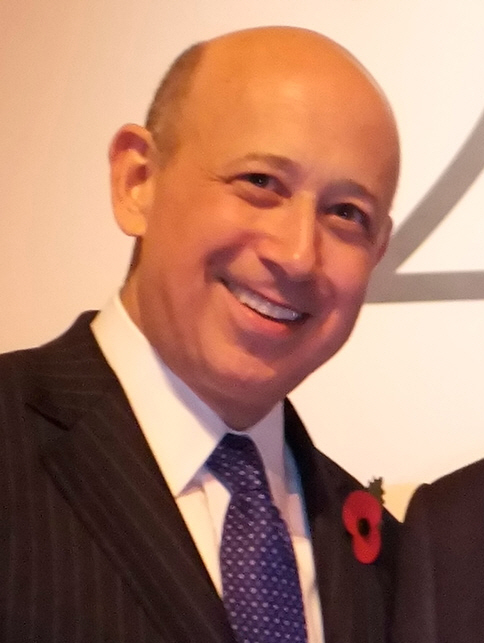
Lloyd Blankfein is an American investment banker and former chief executive officer of Goldman Sachs, one of the world's most prominent financial institutions. His career at Goldman Sachs spanned over three decades, during which he played a pivotal role in shaping the firm's strategy and navigating complex global markets, particularly through the 2008 financial crisis. Blankfein's leadership style, characterized by a focus on risk management and client relationships, left a lasting mark on the investment banking industry and cemented his reputation as a key figure in modern finance.
Quick Facts
| Full Name | Lloyd Blankfein |
|---|---|
| Known As | Lloyd Blankfein |
| Birth Date | September 20, 1954 |
| Age | 69 |
| Birthplace | Bronx, New York City |
| Nationality | American |
| Profession | American investment banker and former chief executive officer of Goldman Sachs |
| Parents | Father worked as a postal clerk, mother worked as a receptionist |
| Partner/Fiancee | Laura Blankfein |
| Children | Three children |
| Net Worth | $1 billion to $1.5 billion |
From his early days as a gold trader to his ascent to the top of Goldman Sachs, Blankfein's journey reflects the evolution of Wall Street in the late 20th and early 21st centuries. His tenure as CEO saw the firm expand its global footprint, adapt to regulatory changes, and maintain its position as a leader in mergers and acquisitions, securities trading, and investment management. Beyond his professional achievements, Blankfein has been a vocal commentator on economic policy and corporate governance, influencing debates on financial stability and business ethics.
Lloyd Blankfein Early Life and Childhood
Lloyd Blankfein was born on September 20, 1954, in the Bronx, New York City, making him an American citizen by birth. He grew up in a working-class neighborhood in the Bronx, where his family lived in a public housing project. His childhood environment was shaped by the economic challenges of the area, which influenced his later perspectives on opportunity and hard work. Blankfein has described his upbringing as modest, with his parents working to provide for the family in a community where financial stability was often precarious.
As a child, Blankfein attended public schools in the Bronx, where he demonstrated academic promise from an early age. His early years were marked by a focus on education as a pathway to advancement, with his family emphasizing the importance of schooling despite limited resources. The urban setting of the Bronx exposed him to diverse cultures and economic realities, factors that later informed his understanding of global markets and social dynamics. Blankfein's childhood experiences in New York City contributed to his resilience and adaptability, traits that would prove valuable in his financial career.
Lloyd Blankfein Family Life and Personal Background
Lloyd Blankfein's parents were of Jewish descent, with his father working as a postal clerk and his mother as a receptionist. Their jobs provided a steady but limited income, and the family relied on public housing for accommodation. Blankfein has spoken about the influence of his parents' work ethic and their emphasis on education, which they viewed as essential for overcoming economic barriers. He has one sibling, a brother, though details about his brother's life are not widely publicized.
The family's background in a lower-income household in the Bronx shaped Blankfein's early worldview, instilling a sense of determination and practicality. His parents' experiences as immigrants' children in America highlighted the value of perseverance and community support. Blankfein has noted that his family's struggles with financial insecurity motivated him to pursue a career that offered stability and success. This personal background provided a foundation for his later focus on risk management and economic opportunity in his professional life.
Lloyd Blankfein Education
Lloyd Blankfein attended Thomas Jefferson High School in Brooklyn, New York, where he excelled academically and graduated as valedictorian. His high school performance earned him a scholarship to Harvard College, where he enrolled in 1971. At Harvard, Blankfein studied government, graduating magna cum laude with a Bachelor of Arts degree in 1975. His academic interests at Harvard included political science and economics, which laid the groundwork for his understanding of policy and markets.
After completing his undergraduate studies, Blankfein pursued a law degree at Harvard Law School, where he earned his Juris Doctor in 1978. During law school, he developed skills in analysis and negotiation that would later benefit his career in finance. Blankfein's education at Harvard provided him with a strong intellectual foundation and access to networks that facilitated his entry into the financial industry. His academic achievements reflected his commitment to learning and his ability to excel in competitive environments.
Lloyd Blankfein Career Beginnings
After graduating from Harvard Law School in 1978, Lloyd Blankfein began his career as a tax lawyer at the law firm Donovan Leisure Newton & Irvine in New York City. He worked on corporate tax cases, gaining experience in legal and financial analysis. However, Blankfein found the pace of law firm work slow and sought opportunities with greater dynamism and financial upside. In 1981, he transitioned to the financial industry by joining the commodities trading firm J. Aron & Company as a gold trader.
At J. Aron, Blankfein quickly adapted to the fast-paced world of trading, focusing on gold and other precious metals. His role involved managing risk and executing trades in volatile markets, which honed his skills in market analysis and client relations. Blankfein's performance at J. Aron caught the attention of senior management, and he rose through the ranks, eventually becoming a partner. When Goldman Sachs acquired J. Aron in 1981, Blankfein became part of the Goldman Sachs organization, marking the start of his long tenure at the firm.
Lloyd Blankfein Rise to Fame
Lloyd Blankfein's rise to fame within Goldman Sachs accelerated in the 1990s as he took on leadership roles in the firm's trading divisions. He became the head of the Currency and Commodities Trading division, where he oversaw significant growth in Goldman Sachs' commodities business. Blankfein's success in expanding the firm's trading operations and managing complex risks earned him recognition as a key player in Goldman Sachs' profitability. In 1997, he was named a partner, a prestigious position that reflected his contributions to the firm's bottom line.
The turning point in Blankfein's public profile came in 2003 when he was appointed president and chief operating officer of Goldman Sachs, serving under then-CEO Henry Paulson. In this role, Blankfein was responsible for the firm's daily operations and strategic direction, positioning him as the likely successor to Paulson. His leadership during this period helped Goldman Sachs navigate the dot-com bust and early 2000s market fluctuations, reinforcing his reputation for effective risk management. Blankfein's ascent to the top of Goldman Sachs was solidified when he became CEO in 2006, bringing him into the global spotlight as one of Wall Street's most influential figures.
Lloyd Blankfein Professional Career
Lloyd Blankfein's professional career at Goldman Sachs is defined by his leadership across trading, risk management, and executive roles, culminating in his tenure as CEO from 2006 to 2018. His career trajectory within the firm reflects the evolution of Goldman Sachs from a traditional investment bank to a diversified financial powerhouse, with Blankfein playing a central role in its strategic shifts and global expansion.
Early Career at Goldman Sachs
After Goldman Sachs acquired J. Aron in 1981, Blankfein integrated into the firm's commodities trading division. He initially focused on gold trading, leveraging his experience from J. Aron to build Goldman Sachs' presence in precious metals markets. In the late 1980s and early 1990s, Blankfein expanded his responsibilities to include other commodities and currencies, helping to establish Goldman Sachs as a leader in these areas. His early career was marked by a hands-on approach to trading and a keen understanding of market dynamics, which contributed to the division's profitability.
During this period, Blankfein also developed the firm's risk management frameworks for trading operations, emphasizing disciplined oversight and client-centric strategies. He played a key role in navigating the 1987 stock market crash and the early 1990s recession, where his focus on liquidity and hedging helped mitigate losses. Blankfein's success in growing the commodities business led to his promotion to managing director in 1994, and he continued to advance as he took on broader leadership roles within the firm's trading and sales divisions.
Major Career Milestones
One of Lloyd Blankfein's major career milestones was his appointment as the head of the Fixed Income, Currency, and Commodities (FICC) division in the late 1990s. In this role, he oversaw a significant portion of Goldman Sachs' revenue, driving innovation in derivatives trading and expanding the firm's global footprint. Under his leadership, FICC became a cornerstone of Goldman Sachs' profitability, particularly through the development of complex financial products and risk management solutions. Blankfein's ability to manage large-scale trading operations and adapt to regulatory changes was instrumental in the division's success.
Another key milestone was Blankfein's elevation to the role of president and chief operating officer in 2003. As COO, he worked closely with CEO Henry Paulson to streamline the firm's operations and enhance its competitive position. Blankfein focused on integrating technology into trading processes, improving client services, and managing the firm's balance sheet. His efforts helped Goldman Sachs maintain its leadership in investment banking and securities trading, even as market conditions grew more challenging. This period set the stage for his eventual succession to CEO, as Blankfein demonstrated his capacity for executive leadership and strategic vision.
Notable Performances or Projects
Lloyd Blankfein's tenure as CEO of Goldman Sachs, from 2006 to 2018, included several notable performances and projects that defined his legacy. During the 2008 financial crisis, Blankfein led Goldman Sachs through one of the most turbulent periods in modern finance. The firm navigated the crisis by reducing its exposure to risky assets, raising capital, and converting to a bank holding company to access federal support. Under Blankfein's direction, Goldman Sachs repaid its Troubled Asset Relief Program (TARP) funds ahead of schedule and returned to profitability quickly, outperforming many peers. His crisis management emphasized liquidity preservation and client trust, though it also drew scrutiny over the firm's role in the mortgage market.
Another significant project under Blankfein's leadership was the expansion of Goldman Sachs' investment management and consumer banking divisions. He oversaw the launch of Marcus by Goldman Sachs in 2016, a digital consumer bank aimed at offering savings accounts and personal loans. This initiative marked a strategic shift for the firm, diversifying its revenue streams beyond traditional investment banking. Blankfein also championed the firm's growth in Asia and other emerging markets, strengthening its global presence through new offices and partnerships. These projects reflected his focus on innovation and adaptation in a changing financial landscape.
Later Career Developments
In the later years of his career, Lloyd Blankfein focused on steering Goldman Sachs through post-crisis regulatory reforms and evolving market conditions. He implemented stricter compliance and risk controls in response to the Dodd-Frank Act and other regulations, aiming to rebuild public trust after the crisis. Blankfein also emphasized corporate social responsibility, increasing the firm's investments in sustainable finance and diversity initiatives. His leadership during this period involved balancing profitability with ethical considerations, as Goldman Sachs faced ongoing scrutiny over its business practices.
Blankfein stepped down as CEO in October 2018, transitioning to the role of senior chairman at Goldman Sachs. In this capacity, he has provided advisory support to the firm's leadership and remained involved in client relationships and strategic discussions. Since leaving the CEO role, Blankfein has engaged in public speaking and commentary on economic issues, often discussing topics like globalization, technology in finance, and income inequality. His later career developments highlight a continued influence in the financial industry, even as he has reduced his day-to-day operational responsibilities.
Lloyd Blankfein Work Style, Influence, and Public Image
Lloyd Blankfein's work style is characterized by a pragmatic and analytical approach, with a strong emphasis on risk management and client relationships. He is known for his deep involvement in trading and market details, often engaging directly with teams to understand complex transactions. Blankfein's leadership at Goldman Sachs fostered a culture of discipline and innovation, where decisions were data-driven and focused on long-term stability. His influence extended beyond the firm through his advocacy for financial literacy and economic policy, shaping debates on Wall Street's role in society.
Blankfein's public image has been shaped by his tenure during the 2008 financial crisis, where he was both praised for Goldman Sachs' resilience and criticized for the firm's perceived role in the crisis. He has been a vocal defender of the financial industry, arguing for its importance in economic growth while acknowledging the need for reform. Blankfein's communications often blend humor and candor, making him a recognizable figure in media interviews and public forums. Despite controversies, his reputation as a skilled banker and strategic thinker has endured, influencing how leaders in finance approach risk and governance.
Lloyd Blankfein Awards and Achievements
- Named one of Time magazine's 100 Most Influential People in the World in 2009.
- Received the Harvard College Class of 1975 Award for outstanding service to the college community.
- Recognized by the Anti-Defamation League with the Americanism Award in 2010 for contributions to civil rights and tolerance.
- Listed among Forbes' World's Most Powerful People multiple times during his tenure as CEO.
- Honored with the Wall Street Rising Leadership Award for efforts in revitalizing Lower Manhattan after 9/11.
- Awarded the Horatio Alger Award in 2012 for achieving success despite humble beginnings.
- Received the Appeal of Conscience Award in 2013 for promoting ethical business practices.
- Recognized by the Museum of American Finance with the 2014 John E. Herzog Award for contributions to the financial industry.
Lloyd Blankfein Net Worth
Lloyd Blankfein's net worth is estimated to be in the range of $1 billion to $1.5 billion, primarily accumulated through his compensation at Goldman Sachs, including salary, bonuses, and stock awards. As CEO, Blankfein earned significant annual compensation, with reported figures often exceeding $20 million in peak years. His wealth also derives from investments and holdings built over his long career in finance. However, exact net worth figures are not publicly confirmed, as Blankfein maintains a private approach to his finances. His net worth reflects his success in leading one of the world's top investment banks, though it has been subject to fluctuations based on market conditions and Goldman Sachs' performance.
Lloyd Blankfein Personal Life
Lloyd Blankfein is married to Laura Blankfein, and the couple has three children. Details about his personal life are kept relatively private, with Blankfein focusing on family and maintaining a low profile outside of his professional engagements. He has residences in New York City and enjoys activities such as reading and travel. Blankfein's personal interests include history and economics, which he often discusses in public appearances. His lifestyle reflects the demands of his career, with an emphasis on work-life balance and family time, though he has not extensively publicized his hobbies or daily routines.
Lloyd Blankfein Philanthropy and Community Work
Lloyd Blankfein has been involved in philanthropic efforts, primarily through donations and support for educational and medical causes. He and his wife have contributed to institutions like Harvard University, where they funded scholarships and programs. Blankfein has also supported cancer research and healthcare initiatives, including donations to Memorial Sloan Kettering Cancer Center. His community work includes involvement with organizations focused on economic opportunity and diversity, such as the Robin Hood Foundation in New York. While not as publicly prominent as his professional career, Blankfein's philanthropy aligns with his background and interests in education and health.
Lloyd Blankfein Legacy and Influence
Lloyd Blankfein's legacy in the financial industry is defined by his leadership at Goldman Sachs during a period of significant change and crisis. His emphasis on risk management and strategic adaptation helped the firm navigate the 2008 financial crisis and subsequent regulatory shifts, reinforcing its position as a global leader. Blankfein's influence extends to how investment banks approach governance and client relations, with his focus on discipline and innovation serving as a model for peers. His career illustrates the rise of trading and risk expertise within banking, shaping the modern landscape of Wall Street.
Beyond his professional impact, Blankfein's legacy includes his role as a commentator on economic issues, where he has advocated for financial literacy and responsible capitalism. His insights into globalization and technology have influenced policy discussions and business practices. Blankfein's journey from a working-class background to the pinnacle of finance also serves as an example of upward mobility, inspiring discussions on opportunity and meritocracy. As a senior statesman in banking, his continued involvement in advisory roles ensures that his influence persists, contributing to ongoing debates on the future of finance and corporate leadership.
Frequently Asked Questions
How old is Lloyd Blankfein?
Lloyd Blankfein was born on September 20, 1954, making him 69 years old.
Where was Lloyd Blankfein born?
He was born in the Bronx, New York City, and grew up in a working-class neighborhood there.
What is Lloyd Blankfein's nationality?
Lloyd Blankfein is an American citizen by birth.
What is Lloyd Blankfein's profession?
He is an American investment banker and the former chief executive officer of Goldman Sachs.
Who are Lloyd Blankfein's parents?
His father worked as a postal clerk and his mother as a receptionist, both of Jewish descent.
Is Lloyd Blankfein married?
Yes, he is married to Laura Blankfein, and they have three children.
What is Lloyd Blankfein's net worth?
His net worth is estimated to be in the range of $1 billion to $1.5 billion.
What was Lloyd Blankfein's role at Goldman Sachs?
He served as CEO of Goldman Sachs from 2006 to 2018, after rising through roles such as president and chief operating officer.
Where did Lloyd Blankfein go to college?
He attended Harvard College, graduating magna cum laude in 1975, and later earned a Juris Doctor from Harvard Law School in 1978.
What awards has Lloyd Blankfein received?
He has received awards such as being named one of Time's 100 Most Influential People, the Horatio Alger Award, and the Anti-Defamation League's Americanism Award.