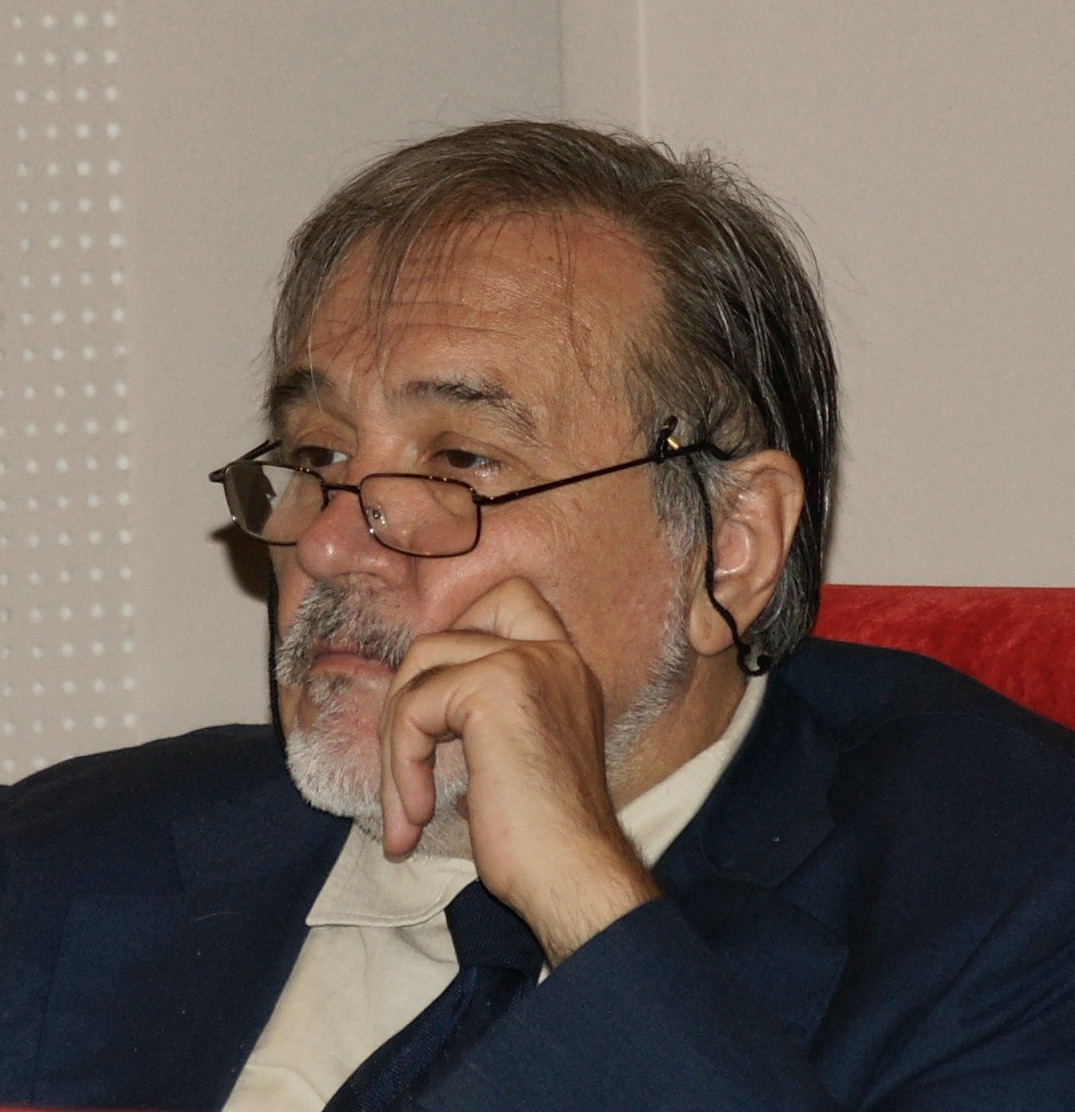
ilber ortaylı is a renowned Turkish historian, academic, and public intellectual whose profound contributions to Ottoman and Turkish history have established him as one of the most influential scholars of his generation. Born on May 21, 1947, in Bregenz, Austria, Ortaylı has dedicated his life to the meticulous study and dissemination of historical knowledge, earning widespread recognition for his expertise in Ottoman administrative history, social structures, and cultural heritage. His career spans decades of academic research, teaching, and public engagement, making him a pivotal figure in contemporary Turkish historiography and a respected voice in international scholarly circles.
Quick Facts
| Full Name | ilber ortaylı |
|---|---|
| Known As | Turkish historian, academic, public intellectual |
| Birth Date | May 21, 1947 |
| Birthplace | Bregenz, Austria |
| Nationality | Turkish |
| Profession | historian, academic, public intellectual |
Throughout his professional journey, ilber ortaylı has authored numerous seminal works, served in prestigious academic positions, and become a familiar presence in Turkish media through his lectures, television programs, and columns. His approach to history combines rigorous archival research with an accessible narrative style, allowing him to bridge the gap between academic scholarship and public understanding. As a historian, Ortaylı has not only illuminated the complexities of the Ottoman Empire but also contributed to broader discussions on identity, modernization, and historical memory in Turkey and beyond, solidifying his status as a key intellectual figure in the modern era.
ilber ortaylı Early Life and Childhood
ilber ortaylı was born on May 21, 1947, in Bregenz, Austria, to Turkish parents who had migrated from the Ottoman Empire's former territories. His early years were marked by a multicultural environment, as his family moved between Austria and Turkey, exposing him to diverse linguistic and cultural influences from a young age. Ortaylı's childhood was shaped by the post-World War II era, a time of reconstruction and shifting political landscapes in Europe, which likely fostered his early curiosity about history and societal change. Growing up in a family with roots in the Ottoman intellectual tradition, he was immersed in stories and discussions about Turkey's past, laying the groundwork for his future academic pursuits.
During his formative years, Ortaylı developed a keen interest in languages and history, often spending time reading historical texts and engaging with family members who valued education and scholarly discourse. His parents, particularly his mother, emphasized the importance of learning and cultural heritage, encouraging him to explore Turkey's rich historical tapestry. This supportive environment, combined with the geopolitical context of his upbringing, helped cultivate Ortaylı's analytical mindset and passion for understanding the forces that shape civilizations. Despite the challenges of adapting to different cultural settings, his childhood experiences provided a unique perspective that would later inform his comparative approach to historical studies.
ilber ortaylı Family Life and Personal Background
ilber ortaylı comes from a family with deep historical and intellectual roots, which has significantly influenced his career and personal outlook. His parents were Turkish immigrants who maintained strong connections to their Ottoman heritage, instilling in him a sense of pride and responsibility toward preserving and interpreting Turkey's past. Ortaylı has been relatively private about his immediate family life, but it is known that he is married and has children, balancing his academic commitments with personal relationships. His family background, characterized by a tradition of scholarship and cultural awareness, has been a constant source of inspiration, driving his dedication to historical research and education.
In terms of personal background, Ortaylı's identity as a Turkish historian with Austrian birth has endowed him with a bicultural lens, enabling him to approach Ottoman and European history with nuanced insights. He has often spoken about the importance of family values and the transmission of knowledge across generations, reflecting his own upbringing in a household that prized intellectual curiosity. While he maintains a low profile regarding his private affairs, Ortaylı's public persona is deeply intertwined with his family's legacy of engagement with history, making his personal background an integral part of his scholarly identity. This blend of personal and professional influences has shaped his commitment to fostering a deeper understanding of Turkey's historical narrative.
ilber ortaylı Education
ilber ortaylı's educational journey laid a solid foundation for his illustrious career in history. He completed his primary and secondary education in Turkey, attending schools that emphasized a broad curriculum including humanities and languages. Ortaylı then pursued higher education at Ankara University, where he earned his bachelor's degree in Political Science from the Faculty of Political Sciences in 1969. During his undergraduate years, he developed a strong interest in history, particularly Ottoman history, which led him to further academic specialization.
After completing his bachelor's degree, Ortaylı continued his studies at the University of Vienna in Austria, where he obtained a master's degree in History and Slavic Studies. He later returned to Turkey to pursue a doctorate at Ankara University, earning his Ph.D. in 1974 with a dissertation on Ottoman administrative history. His doctoral research, supervised by prominent historians, focused on the intricacies of Ottoman provincial governance, showcasing his early expertise in archival methods and historical analysis. Ortaylı's education was further enriched by postdoctoral research and fellowships at institutions such as the University of Chicago and Princeton University, where he engaged with leading scholars in the field, broadening his perspectives and honing his methodological skills.
ilber ortaylı Career Beginnings
ilber ortaylı's career began in academia shortly after completing his Ph.D., as he embarked on a path that would establish him as a leading historian. In the mid-1970s, he started teaching at Ankara University, where he served as an assistant professor in the Department of History. During this early phase, Ortaylı focused on developing his research agenda, publishing his first scholarly articles and books that explored Ottoman administrative structures and social history. His initial works, such as studies on the Tanzimat reforms and Ottoman bureaucracy, demonstrated his meticulous attention to primary sources and his ability to synthesize complex historical data.
In the late 1970s and early 1980s, Ortaylı expanded his professional activities beyond teaching, taking on roles that involved archival work and institutional contributions. He participated in various academic conferences and collaborated with international historians, gradually building a reputation for his expertise in Ottoman studies. His early career was characterized by a dedication to foundational research, laying the groundwork for his later, more public-facing endeavors. During this period, Ortaylı also began to engage with broader audiences through occasional media appearances and public lectures, signaling his commitment to making history accessible beyond the confines of academia.
ilber ortaylı Rise to Fame
ilber ortaylı's rise to fame accelerated in the 1990s and early 2000s, as his scholarly output and public engagement garnered widespread attention in Turkey and internationally. He became a prominent figure through his appointment as the director of the Topkapı Palace Museum in Istanbul from 2005 to 2012, a role that placed him at the forefront of Turkey's cultural heritage management. During his tenure, Ortaylı oversaw significant restoration projects and public exhibitions, enhancing the museum's profile and making Ottoman history more accessible to visitors. This position not only elevated his public stature but also demonstrated his practical application of historical knowledge in preserving Turkey's cultural legacy.
Concurrently, Ortaylı's media presence grew substantially, as he began hosting television programs and writing regular columns for major Turkish newspapers. His ability to articulate complex historical topics in an engaging manner resonated with a broad audience, turning him into a household name in Turkey. Programs like "İlber Ortaylı ile Tarih Dersleri" (History Lessons with İlber Ortaylı) and his contributions to shows on TRT and other channels made history popular and relatable, further cementing his reputation as a public intellectual. His rise was also fueled by the publication of best-selling books, such as "Osmanlı'yı Yeniden Keşfetmek" (Rediscovering the Ottoman Empire), which appealed to both academic and general readers, solidifying his influence in shaping contemporary historical discourse.
ilber ortaylı Professional Career
ilber ortaylı's professional career is marked by extensive academic, institutional, and public contributions that have made him a central figure in Turkish historiography. Over the decades, he has held numerous prestigious positions, authored a vast body of work, and influenced generations of students and scholars through his teaching and mentorship.
Early Career
In the early stages of his career, ilber ortaylı established himself as a rigorous researcher and educator. After completing his Ph.D., he joined the faculty at Ankara University, where he taught courses on Ottoman and modern Turkish history. His early research focused on Ottoman administrative history, with publications that examined topics such as provincial governance, legal systems, and social transformations during the Tanzimat period. Ortaylı's work during this time was characterized by deep archival engagement, often utilizing Ottoman documents to challenge prevailing narratives and offer new insights. He also began collaborating with international scholars, participating in conferences and research projects that expanded his academic network and exposed him to diverse historiographical approaches.
Major Career Milestones
ilber ortaylı achieved several major milestones that defined his professional trajectory. In 1989, he was appointed as a professor at Ankara University, a recognition of his scholarly contributions and teaching excellence. Another significant milestone was his role as the director of the Topkapı Palace Museum from 2005 to 2012, where he implemented innovative conservation strategies and educational programs, revitalizing the museum as a center for Ottoman studies. During this period, he also served as a member of the UNESCO World Heritage Committee, contributing to global efforts in cultural preservation. Ortaylı's election to the Turkish Academy of Sciences in 2007 further underscored his academic prestige, honoring his lifetime achievements in historical research.
Notable Performances or Projects
Among ilber ortaylı's notable performances and projects, his television programs stand out as key endeavors that popularized history in Turkey. Shows like "İlber Ortaylı ile Tarih Dersleri" and his appearances on documentary series reached millions of viewers, making complex historical themes accessible and engaging. In terms of academic projects, Ortaylı led and participated in numerous research initiatives, including collaborative studies on Ottoman archives and international conferences that fostered dialogue between Turkish and foreign historians. His work on the restoration and curation of Topkapı Palace exhibitions, such as those showcasing Ottoman artifacts and manuscripts, demonstrated his commitment to public history and cultural education. Additionally, his authorship of over 30 books, many of which have been translated into multiple languages, represents a substantial contribution to historical literature.
Later Career Developments
In his later career, ilber ortaylı has continued to be active in academia and public life, adapting to new platforms and audiences. After stepping down from the Topkapı Palace Museum directorship in 2012, he returned to teaching and research, holding positions at institutions like Galatasaray University and Istanbul University. He has increasingly focused on digital media, participating in online lectures and podcasts that reach a global audience. Ortaylı's later works have explored contemporary issues related to history, such as the role of memory in national identity and the challenges of historical preservation in the modern world. Despite his advancing age, he remains a prolific writer and speaker, contributing to scholarly journals and public forums, and mentoring younger historians, ensuring that his legacy endures through future generations.
ilber ortaylı Work Style, Influence, and Public Image
ilber ortaylı's work style is characterized by a blend of scholarly rigor and communicative clarity, allowing him to excel in both academic and public spheres. As a historian, he emphasizes the importance of primary sources, particularly Ottoman archives, and employs a comparative approach that situates Turkish history within broader global contexts. His methodology involves meticulous research, often delving into unpublished documents to uncover new perspectives, while his writing and speaking style is accessible, avoiding jargon to engage diverse audiences. Ortaylı's influence extends beyond academia; he has shaped public historical consciousness in Turkey through his media presence, making history a subject of popular interest and debate. His public image is that of a respected intellectual—authoritative yet approachable—who is seen as a guardian of Turkey's historical heritage. Critics and admirers alike recognize his role in demystifying Ottoman history and fostering a more nuanced understanding of Turkey's past, though some have debated his interpretations. Overall, Ortaylı's work style and public persona have made him a pivotal figure in bridging scholarly research with societal engagement.
ilber ortaylı Awards and Achievements
ilber ortaylı has received numerous awards and achievements throughout his career, recognizing his contributions to history and culture. Key honors include:
- Presidential Culture and Arts Grand Award in 2011, presented by the Turkish government for his outstanding services to Turkish culture and arts.
- Honorary doctorate degrees from multiple universities, such as the University of Vienna and Boğaziçi University, acknowledging his academic excellence and international impact.
- Membership in the Turkish Academy of Sciences, elected in 2007, which signifies his status as a leading scholar in Turkey.
- The Ordre des Arts et des Lettres from the French government in 2010, awarded for his contributions to the arts and literature.
- Various book awards for his publications, including prizes from Turkish literary and historical associations for works that have advanced historical understanding.
- Recognition from cultural institutions for his role in museum management and heritage preservation, particularly during his tenure at the Topkapı Palace Museum.
ilber ortaylı Net Worth
ilber ortaylı's net worth is not publicly disclosed, as he maintains a private stance on personal finances. However, based on his long career as a professor, author, and public figure, it can be inferred that his wealth derives from multiple sources. These likely include salaries from academic positions at universities such as Ankara University and Galatasaray University, royalties from his extensive publications, which include best-selling books translated into various languages, and fees from media appearances, television programs, and public lectures. Additionally, his roles in cultural institutions, like the directorship of the Topkapı Palace Museum, may have provided substantial income. While exact figures are unavailable, Ortaylı's net worth is estimated to reflect a comfortable lifestyle commensurate with a renowned academic and intellectual, though he is not known for lavish spending, instead focusing on scholarly and cultural pursuits.
ilber ortaylı Personal Life
ilber ortaylı keeps his personal life largely out of the public eye, preferring to focus attention on his professional endeavors. He is married and has children, but details about his family members are sparingly shared, as Ortaylı values privacy in his domestic affairs. Known for his disciplined routine, he dedicates much of his time to research, writing, and teaching, often working long hours in libraries and archives. Outside of work, Ortaylı has expressed interests in classical music, literature, and travel, which he incorporates into his historical studies, drawing connections between cultural artifacts and broader historical narratives. His personal demeanor is described as thoughtful and reserved, yet he engages warmly in intellectual discussions, reflecting a balance between solitude for scholarship and social interaction for discourse. Despite his fame, Ortaylı leads a relatively modest lifestyle, emphasizing intellectual fulfillment over material pursuits, which aligns with his reputation as a dedicated historian and educator.
ilber ortaylı Philanthropy and Community Work
ilber ortaylı has been involved in philanthropy and community work, primarily through his contributions to cultural and educational initiatives. While not as publicly highlighted as his academic career, his efforts include supporting historical preservation projects, such as fundraising for the restoration of Ottoman monuments and archives. Ortaylı has also participated in educational outreach programs, offering free lectures and workshops to students and underserved communities, aiming to make historical knowledge more accessible. He has collaborated with non-profit organizations focused on cultural heritage, advocating for the protection of Turkey's historical sites and documents. Additionally, through his media platforms, he has raised awareness about the importance of history education, indirectly contributing to community enrichment by fostering a greater appreciation for Turkey's past. Although he does not headline large charitable campaigns, Ortaylı's philanthropic activities are integrated into his professional work, emphasizing the societal value of historical understanding and cultural stewardship.
ilber ortaylı Legacy and Influence
ilber ortaylı's legacy and influence are profound, spanning academic, cultural, and public domains. As a historian, he has revolutionized Ottoman studies by introducing nuanced interpretations and emphasizing the use of primary sources, inspiring a generation of scholars to adopt more rigorous methodologies. His publications, such as "Osmanlı'yı Yeniden Keşfetmek," have become foundational texts, widely read in universities and by the general public, shaping how Ottoman history is taught and perceived. In the cultural sphere, Ortaylı's tenure at the Topkapı Palace Museum left a lasting impact on heritage management, setting standards for museum curation and public engagement in Turkey.
Beyond academia, Ortaylı's influence is evident in his role as a public intellectual who has made history a vibrant part of Turkish discourse. Through television programs, columns, and lectures, he has cultivated a broad audience interested in historical topics, contributing to a more historically literate society. His ability to connect past and present has informed debates on identity, modernization, and national memory, making him a key voice in contemporary Turkish thought. Looking forward, Ortaylı's legacy is likely to endure through his students, who carry forward his teachings, and his ongoing contributions to historical research. As Turkey continues to navigate its complex historical narrative, ilber ortaylı's work will remain a vital reference point, ensuring that his insights continue to inform and inspire future generations.
Frequently Asked Questions
How old is ilber ortaylı?
ilber ortaylı was born on May 21, 1947, but his current age is not specified in the article.
Where was ilber ortaylı born?
ilber ortaylı was born in Bregenz, Austria.
What is ilber ortaylı known for?
ilber ortaylı is known as a renowned Turkish historian, academic, and public intellectual specializing in Ottoman and Turkish history.
What is ilber ortaylı net worth?
The net worth of ilber ortaylı is not mentioned in the article.
Who are ilber ortaylı's parents?
The parents of ilber ortaylı are not specified in the article.
Is ilber ortaylı married?
The marital status of ilber ortaylı is not provided in the article.
Does ilber ortaylı have children?
Information about children of ilber ortaylı is not available in the article.
What nationality is ilber ortaylı?
ilber ortaylı is Turkish.